
A dedicated telephone discussion
- Consultation fee
- £15
- Published duration
- 10–20 minutes
Treatment need not be booked during the call. Review the current official information before paying.
Your consultation, with a clearer starting point

The official Lipo Sculpt booking page describes a telephone consultation costing £15 and lasting 10–20 minutes. It is a dedicated opportunity to discuss your requirements with a specialist and talk about a possible treatment plan. The published information says the consultation charge is deducted from treatment that is booked and completed.
You can request a preferred callback time and suggest treatment dates. Those requests need to be agreed with Lipo Sculpt; this website does not show availability or hold appointments. The official page also makes clear that you do not have to book treatment during the call.
The walkthrough below follows the decisions around a consultation, from establishing the purpose of your enquiry to reviewing what was discussed. Its suggestions are optional aids for organising a conversation, not medical instructions, a prescribed assessment or additional booking conditions. Use the official booking page to review the current fee and payment information before continuing.
Decide whether you need a consultation or a quick enquiry
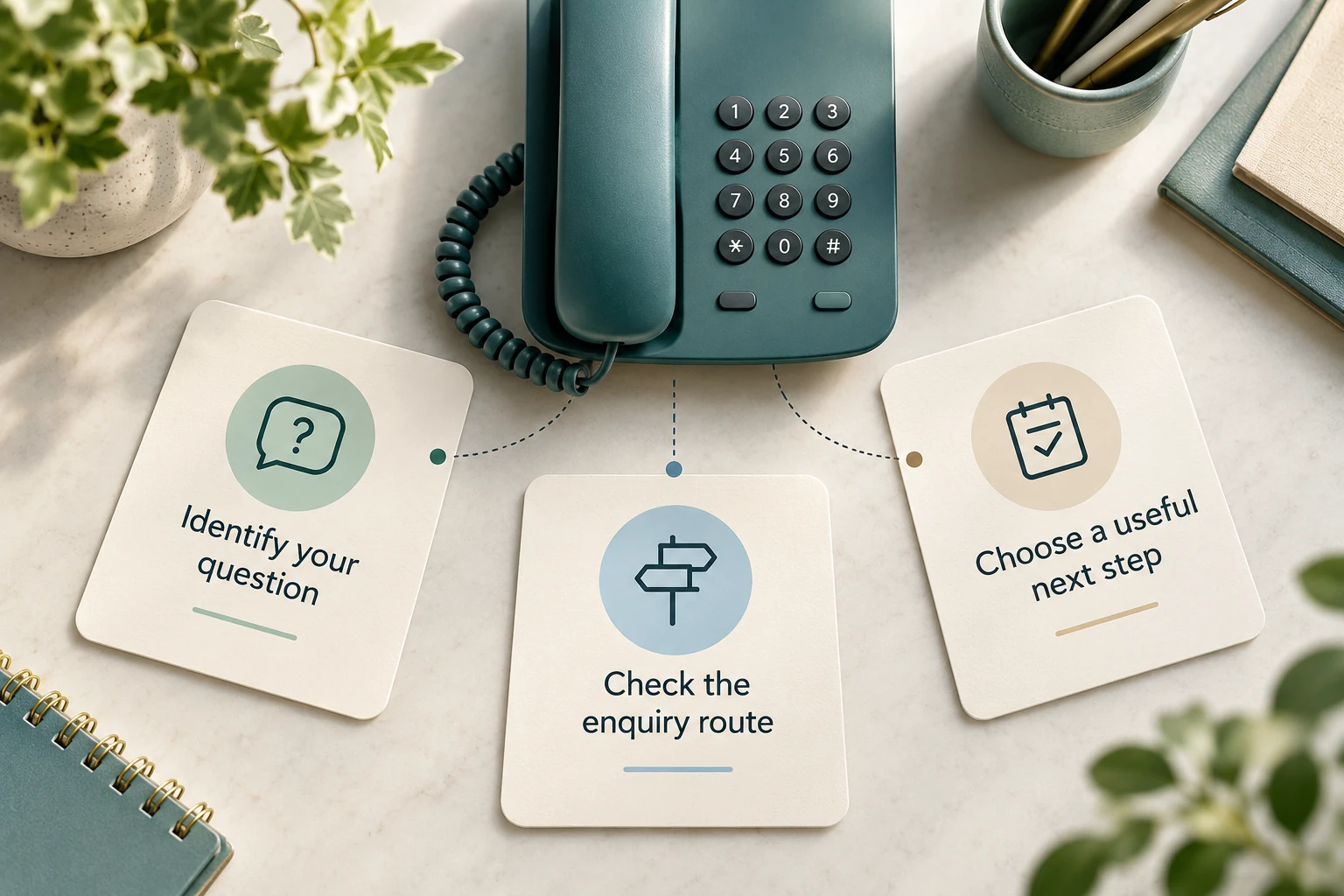
Start by identifying the kind of answer you need. A question about a contact route or an existing appointment may be best raised directly with the team. A discussion of your requirements and a possible treatment plan is the purpose described for the published telephone consultation. Knowing the difference helps you choose the appropriate route without paying for a step you did not intend to take.
For example, a person might want to establish whether an appointment detail has changed. That is a practical enquiry about an existing arrangement. Another person may want to talk through an interest in treatment and understand what could be considered. These examples describe different subjects, not a rule that determines how Lipo Sculpt will handle every call. If you cannot tell which route applies, ask first through the recorded contact details.
The Contact page displays the official telephone number, Facebook and LinkedIn profiles. The consultation booking link leads to consultation information, not another contact channel. Opening a link does not send a question or complete a booking.
This distinction is particularly helpful if you have several concerns. You might need a practical detail confirmed before deciding whether to arrange the consultation at all. Resolve that opening question through the appropriate channel, then return to the published booking information if the dedicated discussion fits your purpose. There is no requirement on this page to choose treatment before asking which next step makes sense.
Review the published offer before following the booking route
The fee and duration displayed here come from the official consultation page recorded in the project research. They describe that consultation, not a treatment quote or a promise that every call will cover every possible subject. Before making a payment, read the current information at the official destination and check that it concerns the service you want to arrange.
The recorded fee is £15, with a published duration of 10–20 minutes. The treatment-credit statement is tied to treatment being booked and completed. If you need to understand how that credit applies to a proposed arrangement, ask Lipo Sculpt about the actual circumstances. Do not infer a transfer, refund or other entitlement from a short fee summary here.
Take time to read the wording alongside the booking action. A payment description and an appointment arrangement are related but separate pieces of information. You should know what is being purchased and what the official process says will happen next. If the wording is different from what you expected, seek an explanation before entering payment details.
This local website links to the official page rather than reproducing its checkout. It has no payment field, transaction checker or appointment confirmation function. The distinction allows you to review the live destination's information where the action takes place. Keep any actual receipt or correspondence from that process for your own reference, and contact the team if the practical arrangement remains unclear afterwards.
Choose the subject you want the conversation to address
A useful opening topic is the reason you are considering treatment. You may have a specific area in mind, an interest in a named service, or a question raised by information you have read. Begin with that reason. It gives the discussion a purpose without requiring you to arrive with a diagnosis or a finished plan.
Try writing one sentence that states what you want to understand. It could identify the concern, the option you have found and the uncertainty between them. The sentence is for your own preparation; it is not a required form of words. You can use ordinary language and let the conversation establish which additional detail is relevant.
If a treatment name prompted your enquiry, include the name accurately. Keep it connected to the page or information where you found it. That prevents a discussion about one method from being confused with another method that uses similar language. The name is a useful reference, while your concern explains why you are raising it.
You may discover that your interest is still quite broad. In that case, identify the question that would help narrow it. You do not need to select a procedure just to make the enquiry sound complete. The published purpose of the consultation is to discuss requirements and a possible plan. Preparing a clear topic supports that conversation without establishing in advance that a service is suitable or that treatment should follow.
Arrange the call around a realistic contact preference
The official booking information allows preferred callback times to be requested. Treat that as an opportunity to communicate when you would like to speak, then check the arrangement that is actually agreed. A preference written into an enquiry does not itself confirm that someone will call at that exact time.
When timing matters, be precise about the period you mean and the contact detail associated with the request. If more than one time would work, you can say so. These are optional practical suggestions, not a requirement to provide a particular schedule. The official process and the team's response should tell you what has been arranged.
Consider whether you will be able to hear the conversation and speak about the subject comfortably. You may prefer a setting where you are unlikely to be interrupted and where your own notes are available. This is preparation for a telephone discussion; it is not an instruction about a clinical setting or the conditions for receiving treatment.
If a contact preference later changes, use a real contact route to explain the change. Do not rely on opening this page again or altering a note on your own device to notify Lipo Sculpt. Equally, avoid assuming that a callback request establishes a later treatment date. The call and a possible treatment appointment have separate arrangements, and each needs the confirmation relevant to it.
Bring a short agenda, with room for the unexpected

An agenda can be as simple as three subjects you want covered. Put the question that affects your next decision first. Then add any practical detail you need to understand and a point you want explained more fully. A small list is easier to use during a conversation than several pages of material you feel obliged to read aloud.
Suppose your main uncertainty is what a proposed service is intended to address. That question should not disappear under a longer list of possible dates. Conversely, if the timing or setting determines whether you can consider an appointment, make that practical issue visible. The order should reflect your actual priorities rather than the order of headings on a website.
Allow the list to change as the discussion develops. An answer may introduce a new term or resolve two questions together. If you want to return to a point, note a few words rather than trying to keep every sentence in memory. You can ask for a pause or a clarification when needed without treating the agenda as a rigid script.
The published duration provides context for the consultation, but this guide does not promise that every question will be settled within it. If an important subject remains open, ask how it should be followed up. The aim of preparation is a clearer exchange, not a demand that a single telephone call produce a complete treatment decision regardless of what information is still required.
Describe expectations without turning them into a prediction
Your expectations are relevant because they explain what interests you about an option. They may concern an intended change, a question about appearance or a personal reason for exploring the service. Describe them in your own words, then ask how they relate to the option being discussed. This gives the conversation context without requiring a guaranteed outcome.
If something you have seen influenced your expectations, identify it. A photograph, a phrase or a comparison can create a strong impression while leaving important details unstated. The consultant needs to know which impression you are trying to understand. A concrete reference is more useful than asking whether a treatment will simply be good for you.
The recorded official information recognises that results vary and are not guaranteed. Keep that limitation present when discussing a possible plan. An intended purpose is different from an individual prediction, and an example is different from evidence of what you will experience. Ask which parts of the explanation are general and which depend on an assessment of your circumstances.
You may also find that your expectations change during the conversation. Make a note of the explanation that prompted the change and any remaining uncertainty. That can help you review the discussion later without relying on the impression you had before the call. This page does not set expected results, treatment timelines or efficacy figures; those questions must be handled in the appropriate individual discussion.
Understand the scope of a possible plan
The official consultation page refers to discussing a possible treatment plan. The word possible matters: talking about an option does not establish that a final plan has been agreed. During the conversation, ask what stage the proposal has reached and what, if anything, needs to happen before a treatment decision can be made.
For a named option, seek an explanation of its purpose and how it connects to the subject you raised. If more than one method is mentioned, keep their names and explanations separate. You may want to know whether they are alternatives being discussed or parts of a proposal that still needs clarification. Do not infer a combination merely because several services were named in the same call.
A description should also leave you able to identify its boundaries. What concern is it intended to address? Which part of your question does it not answer? Is the explanation conditional on suitability, further information or another assessment? Keeping those conditions attached to the answer prevents a preliminary discussion from becoming an unconditional expectation in your notes.
If a term is unfamiliar, ask for its meaning in the context of this proposal. You do not need to learn a general technical vocabulary before understanding the decision in front of you. The preparation offered here concerns the conversation only. It does not select a treatment, recommend a course or supply clinical criteria for determining whether a method can be used.
Give relevant background through the route requested
A discussion about suitability may involve information about your circumstances. Let the relevant professional explain what is needed and how to provide it. If you are unsure whether a detail is significant, ask rather than deciding its importance from a general webpage. This guide does not attempt to supply a medical questionnaire.
You can prepare by having accurate information available for subjects you intend to raise. Distinguish what you know from a detail you need to check. If you do not recall something precisely, say so. Guessing to make a history sound complete can obscure the uncertainty that the conversation needs to address.
Where a document or image is requested, establish the destination and purpose before sending it. Having material ready does not mean every channel is appropriate for it. The privacy information at the place you use should help you understand the relevant handling, and the team should confirm how the requested material relates to the enquiry.
There is no upload tool on this page. Its links do not send files or transmit notes from your device. Nor does the page advise you to stop medication, alter care or undertake physical preparation for a treatment. If instructions are supplied during the real process, seek clarification from the appropriate professional about anything you do not understand. Optional preparation for a conversation should never be mistaken for instructions for undergoing a procedure.
Discuss experience and aftercare as service-specific questions

You may want to understand what an appointment would involve and what information would be provided afterwards. Raise those questions about the actual service under discussion. The experience of one method should not be assumed to apply to another simply because both appear in the non-surgical range.
An enquiry might ask how the procedure would be explained, which practical considerations should be understood beforehand, or how to obtain an answer if an instruction is unclear. These are prompts for the conversation. They do not establish that a particular aftercare arrangement, recovery period or level of support has been verified for this business.
If an explanation affects work, travel or another plan, identify the point that needs a specific answer. Avoid relying on a general impression that non-surgical treatment always requires little planning. The official recorded caution is that non-surgical does not mean risk-free. The relevant professional discussion should address the method and circumstances being considered.
Write down any instruction you receive accurately enough to recognise it later, and ask how you should obtain clarification if needed. This website does not provide clinical aftercare directions or a monitoring service. Its role is to make the enquiry subjects visible so that you can seek the appropriate advice before relying on assumptions about what will happen during or after treatment.
Put the financial questions together before deciding
A consultation fee, a treatment quote and a deposit can refer to different parts of a process. Keep the purpose of each amount clear. The £15 published here concerns the consultation; it is not a total price for any proposed treatment. The official credit wording also should not be read as a complete account of all later payment conditions.
If a treatment price is discussed, ask what the description covers. You may need to understand whether it relates to one appointment, a course or another arrangement actually being proposed. Use the details supplied rather than attaching an industry assumption to the amount. This page does not add payment plans, discounts or charges that have not been verified.
Review the associated conditions alongside the price. An explanation of cost can leave a question about changes or cancellations unresolved. The Terms page identifies the recorded notice-period conflict and links to the full official terms. If that question matters to your decision, ask Lipo Sculpt which condition applies before relying on an interpretation.
Retain the actual quote or payment information with any relevant answer you receive. A clear record makes a later enquiry easier to identify, but keeping a note does not create a booking or a transaction. Payment and confirmation take place through the real process. The local website cannot allocate a payment, check a balance or decide whether a financial condition applies to your circumstances.
Separate date preferences from a treatment arrangement
The official consultation information allows treatment dates to be suggested. This gives you a way to communicate a preference, not access to an availability calendar. A date mentioned during a discussion should remain a proposal until the relevant arrangement has been confirmed with Lipo Sculpt.
Practical details can include the time, setting and service associated with an appointment. If one of those is missing, ask about it explicitly. A broad reference to UK services does not supply a clinic address, and a general statement about home visits does not confirm a visit for every treatment or location. Home visits depend on the recorded considerations of treatment, suitability and local availability.
Before planning around a date, identify the information you have actually received. Does it confirm an appointment, acknowledge a preference or explain what needs to happen next? Those are different messages. You do not need to guess what a response must mean because it arrived after a booking enquiry; read its actual purpose and seek clarification where necessary.
The telephone call is also distinct from the proposed treatment appointment. Confirming a callback does not settle every later practical detail. If you need to revisit a preference, use the official contact route and explain which arrangement you mean. This page cannot reserve a slot, reschedule a visit or notify the team of changes in your diary.
Leave the call knowing which questions are still open
Near the end of a discussion, identify what you have learned rather than trying to remember the entire conversation as one answer. You may have a clearer picture of the proposed option while still awaiting a practical detail. You may have settled the practical questions and want more time to consider the information. Both situations can be recorded accurately.
A brief recap in your own words can expose a misunderstanding while it is easy to clarify. State the option you understood, any conditions attached to it and the next action being discussed. Ask whether that account is correct. This is an optional technique for checking understanding, not a prescribed ending to every consultation.
Keep unresolved questions visible. An unanswered point about suitability should not be treated as resolved because a date was suggested, and an unanswered point about payment should not be treated as resolved because the service was explained. If you need another answer, ask which route should be used and what context to include when following up.
The published information says there is no obligation to book treatment during the call. That gives you room to distinguish learning about an option from agreeing to proceed. It does not alter the conditions of a payment already made or create additional cancellation rights. Those remain subjects for the applicable official information. A useful outcome from the discussion is a clear account of what is understood and what still requires attention.
Review the discussion away from the telephone

After the call, look at the information in relation to your original purpose. Which question brought you to the consultation, and has the answer changed what you need to consider? This review can be brief. Its value lies in connecting the explanation to your decision rather than rereading every page about every treatment.
If you made notes, distinguish statements from your own reactions to them. You may have written that an option interests you, that a detail was explained or that something remains uncertain. These are different entries. Keeping them separate makes it easier to identify whether your next step is reflection, clarification or a practical action.
When you find a discrepancy between your notes and information supplied afterwards, ask about the specific difference. Do not choose the interpretation you prefer solely because it would make the decision simpler. A focused follow-up can refer to the actual wording and explain what you need confirmed. The Contact page provides the recorded routes for continuing that enquiry.
There is no prescribed period on this page for making a decision after the call. The official statement that treatment need not be booked during the consultation should not be expanded into an unverified time limit or a guarantee of future availability. Review the proposal at the stage you have reached and obtain any remaining information that matters before relying on it.
Choose and confirm the next action
Your next action should be specific enough that you know what it accomplishes. You might return to the official booking information, ask for clarification of a proposal or contact the team about an arrangement. A clear action is easier to verify than a broad intention to take the next step without knowing which part of the process it concerns.
If you are continuing through the official website, read the information presented there at that time. The local summary is a reference to the recorded source, not a substitute for the actual booking and payment instructions. Any confirmation or receipt should come from the process you complete, and any outstanding appointment detail should be resolved with Lipo Sculpt.
If plans change after an appointment has been arranged, the issue becomes a question about that booking's conditions. The official text contains both 48-hour and three-working-day notice references. Seek clarification about the applicable requirement through the proper contact route. This walkthrough does not calculate a deadline or promise that a requested change will be accepted.
If your next action is simply to consider the information further, preserve the questions you may want to return to. The consultation has a purpose even when it does not lead immediately to treatment: it provides a discussion of requirements and a possible plan. What matters afterwards is knowing what has been discussed, what has actually been agreed and what decision remains yours to make.
Review official consultation and booking information · Source checked 4 October 2026.
Your next question matters
Speak to Lipo Sculpt about the details relevant to you.