
The approach behind your next decision

Lipo Sculpt brings together non-surgical aesthetic, body-contouring and wellbeing treatments across the UK. Its identity is expressed through the services it describes and the customer charter it publishes: information should be clear, conversations courteous, personal matters treated confidentially, and feedback heard.
Those commitments matter because choosing a treatment provider involves more than recognising a procedure. You may want to know how a question will be handled, what a description actually establishes, and where your own circumstances fit. This page introduces the verified business information and explores the practical meaning of its published charter. It makes no claim about an unverified company history, an unnamed practitioner or a guaranteed result.
Read it as a way to become familiar with Lipo Sculpt before making contact. The service catalogue, the consultation information and the published policies answer different parts of the decision. Together they provide a starting point for questions that need a direct, individual answer.
A business with several areas of focus
Key point
Service scope varies; suitability needs an individual discussion.
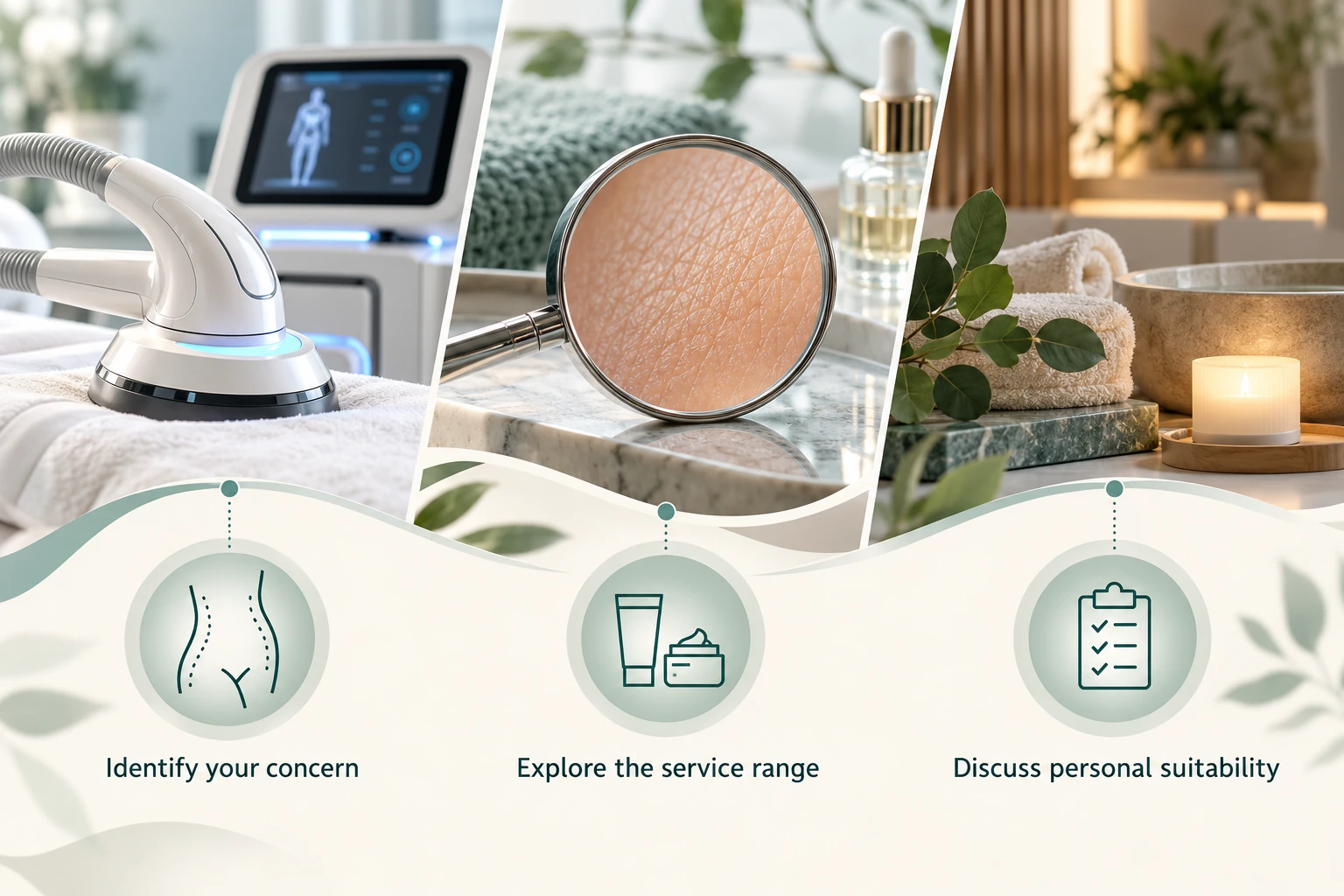
The official Lipo Sculpt website describes a range that covers body contouring, skin concerns and intimate wellbeing. These subjects can have very different significance for the people interested in them. Someone researching a cosmetic change may approach the information differently from someone enquiring about an intimate concern. The shared business name should not obscure those differences.
Among the services named by the official site are cryolipolysis, ToneSculpt, HIFU, radiofrequency microneedling, combined skin tightening, fat-dissolving injections and CryoPen. Vaginal tightening and electromagnetic incontinence treatment also appear in the published range. Listing them here establishes what the source describes; it does not rank the options, predict their effects or identify which is appropriate for a particular person.
The existing Services page provides the longer treatment overview within this website. The purpose of this About page is to give context to that range. A wide catalogue can make it easier to locate a topic, but deciding what to investigate further still depends on the question that led you here. You may be interested in just one subject, and you do not need to build a complete understanding of every service to make a focused enquiry.
If you come across unfamiliar terminology, retain the exact name alongside your question. Similar-sounding names need not represent the same method. A direct explanation of the particular service is more useful than assuming that all options in a category operate alike. The business description introduces the scope; the discussion with Lipo Sculpt should establish the details that matter to your next decision.
The customer charter as a point of reference

Key point
The charter identifies communication, courtesy, confidentiality and feedback.
Lipo Sculpt publishes a customer charter on its official About page. The recorded commitments concern communication, courtesy, confidentiality and feedback. A charter is useful when it makes the relationship between an organisation and its customers easier to understand. It gives you language for asking what you can expect from communication, without requiring you to infer an approach from photographs or a promotional slogan.
There is an important difference between a commitment and an account of a completed experience. The charter states an approach the business has published. It is not a collection of independent reviews, an assessment of every appointment or a promise that a concern will have a particular outcome. This page therefore describes the commitments without presenting them as proof of satisfaction or adding invented customer quotations.
You can use the charter when a question is about communication itself. Perhaps you need an explanation made clearer, want to understand how to give feedback, or wish to ask which information belongs in a private conversation. Referring to the relevant commitment gives the enquiry a concrete starting point. The team can then explain how the subject relates to your circumstances.
The full official charter remains the place to read its published wording. The discussion here is intended to make its themes accessible, not expand them into new service guarantees. If a point affects whether you would feel comfortable proceeding, ask about that point directly. Knowing the question you want answered is often more valuable than trying to judge the entire organisation from a single broad description.
Clarity begins with the meaning of a recommendation
Key point
A recommendation needs a clear purpose and explanation.
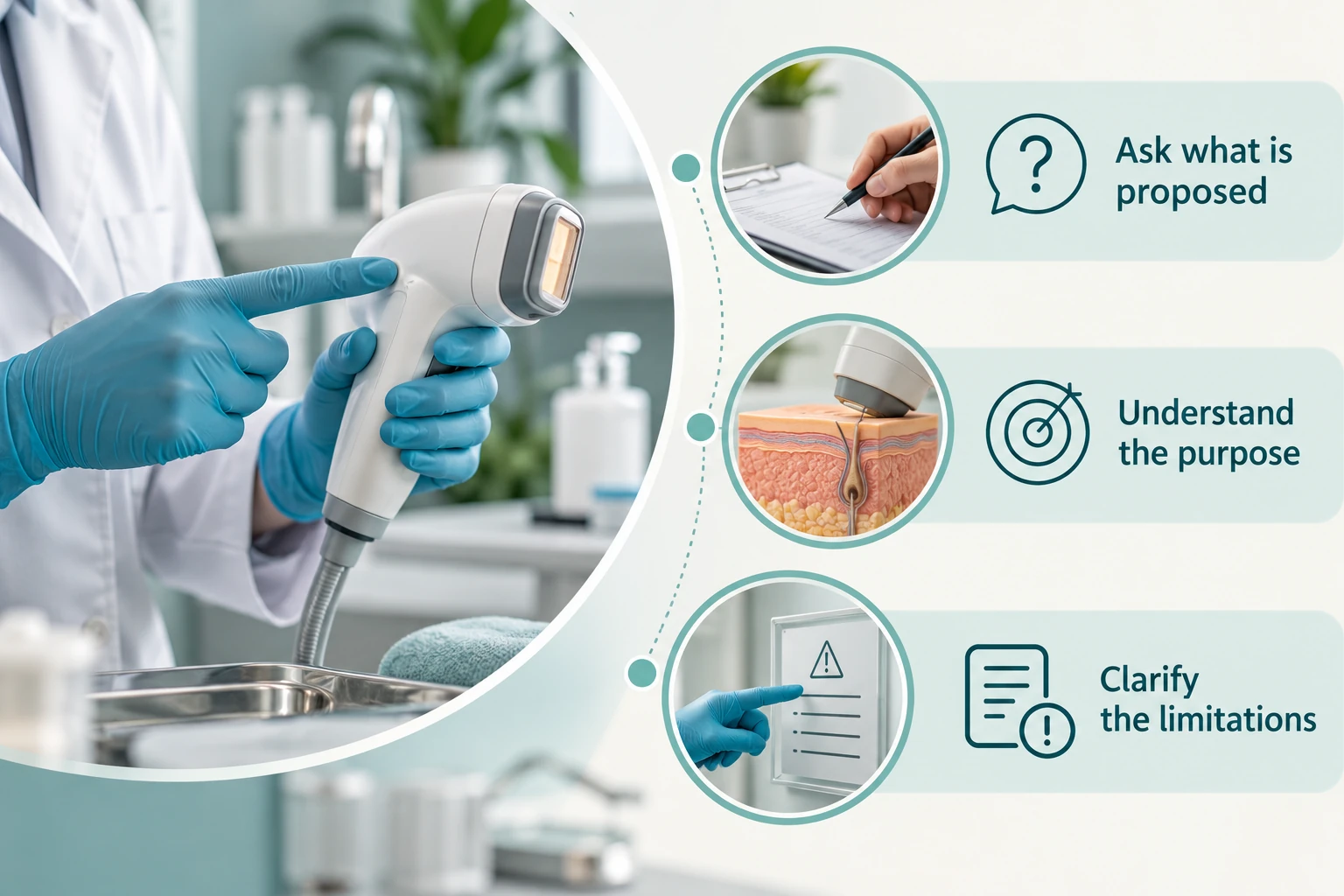
Clear information has to connect with the question a person is asking. An explanation can be technically detailed and still leave the central issue unresolved. If you want to know why an option is being considered, a description of its name or equipment alone may not give you that answer. Understanding the reason for a proposal is a separate part of understanding the proposal itself.
Consider a hypothetical enquiry in which someone has read about two skin-related services. They may recognise both names but be unsure which difference is relevant. A useful question would identify the comparison they want explained: the concern each service is intended to address, the information needed to assess suitability, or the limits of the options under discussion. This example is a way to frame an enquiry, not a description of a Lipo Sculpt assessment protocol.
You can also ask where an explanation stops. General information may describe a treatment category, while an individual recommendation requires more context. Being told what a service is for should not be mistaken for being told that it will deliver a particular result for you. The published material and a personal discussion have different roles.
The charter's emphasis on understandable communication makes these distinctions relevant. You should be able to identify the subject of the answer, the conditions attached to it and any unresolved part of your question. If something still does not make sense, say which part is unclear. That is a more precise request than asking for the entire explanation again without showing where your understanding became uncertain.
Courtesy includes sensitive subjects

Key point
Personal questions deserve respectful, direct communication.
Some visitors can describe their concern in a few ordinary sentences. Others may find the subject difficult to name, particularly when it involves an intimate part of life. Courtesy is relevant to both situations. It gives the conversation room to begin with the person's own account rather than an expectation that everyone will arrive equally comfortable with the terminology.
The verified service range includes intimate wellbeing alongside aesthetic treatments. The presence of those services should not be read as an invitation to discuss private information in public. It indicates a topic the official website addresses. If the subject is personal, choose a direct contact route and ask how any further information should be provided. The Contact page brings the official telephone number and social profiles together.
You may want to ask a brief practical question before explaining more. For example, you could establish whether your enquiry concerns the service you have found, then ask how to continue privately. That sequence is an optional communication choice; it is not a required screening step or a promise about how the business handles every call.
Courtesy also allows for ordinary uncertainty. You may be unfamiliar with a phrase, unsure which page is relevant or returning after changing your mind about an earlier preference. None of these situations requires an elaborate account before you can ask for clarification. The value of a respectful discussion lies in understanding what is being asked and responding to it, while leaving personal decisions with the person considering the service.
Confidentiality belongs alongside informed sharing

Key point
Choose an appropriate channel before sharing sensitive details.
The customer charter includes confidentiality among its commitments. For a visitor, that theme is closely connected to deciding what to share and where to share it. Different destinations have different audiences. A telephone conversation, an enquiry on the official website and a comment on a social platform should not automatically be treated as equivalent settings.
This website links to the verified Facebook and LinkedIn profiles, but visiting a profile does not establish a private consultation. Before adding a message, look at the feature you are using and who can see it. If the information concerns your circumstances, use the contact route appropriate to that enquiry and seek guidance about any material the team requests.
Confidentiality is also different from a complete privacy policy. The charter expresses an approach to customer care. The official privacy policy addresses personal information and describes systems on the official website. A short statement about discretion cannot answer every question about a form, analytics, records or a data request. Those subjects belong with the relevant published policy and the organisation responsible for the process.
You can keep an opening enquiry narrow while still making its purpose clear. Say what the subject is, what answer you are seeking, and whether you need to continue through a more suitable route. There is no reason to publish a detailed personal account simply to establish that you have a question. This is practical guidance for choosing an audience, not an additional privacy assurance or a newly verified description of Lipo Sculpt's internal systems.
A measured view of non-surgical treatment

Key point
Non-surgical does not mean risk-free or guaranteed.
Non-surgical is a broad description of the business's treatment range. It is not a complete safety assessment. The official information recorded for this project recognises that suitability varies, outcomes cannot be guaranteed, and the absence of surgery does not mean the absence of risk. Those limitations are part of understanding the services rather than a detail to leave until after deciding.
An About page can explain a provider's approach, but it cannot determine whether an individual should have a procedure. That question depends on the relevant professional discussion and the circumstances being considered. Similarly, a calm presentation should not be used as evidence that every treatment experience will be comfortable or that every concern has a suitable option within the catalogue.
When you read the service descriptions, separate the broad category from the specific information you need. The phrase non-surgical does not explain a method, identify all potential effects or set an aftercare plan. If those points matter, ask about the named service rather than relying on the category label to supply the answer.
The distinction becomes particularly useful when you are comparing options. Two treatments can share an overall category while raising different questions. Record those differences as subjects to discuss. This page does not provide clinical instructions, suggest changes to medication or identify who should receive a treatment. Its role is to place the published business identity in context so that reassuring language does not replace the information necessary for an individual decision.
Body, skin and wellbeing are different conversations

Key point
Different service categories call for different questions.
A person may arrive at Lipo Sculpt through a search about body shape, a skin concern or an intimate wellbeing question. Each starting point deserves an explanation connected to that subject. Moving between categories on a website should not flatten the differences between them or suggest that a single treatment description can answer every concern.
For body-focused enquiries, you may want to establish which service name relates to the change you are researching. For skin-related enquiries, the question may concern the purpose of a method or whether an issue needs a different kind of assessment. For intimate wellbeing, the first priority may be finding a comfortable way to ask a private question. These are examples of enquiry subjects, not clinical recommendations or a statement that any treatment is appropriate.
The official Home page also includes a caution about skin lesions. New, changing, bleeding, unusual or unidentified lesions may need assessment by a GP or a suitably qualified healthcare professional before cosmetic treatment. An online category heading should not be used to identify a lesion or bypass that assessment. The specific source caution is more relevant than a general assumption that every visible skin concern is cosmetic.
Understanding the different conversations helps you navigate the range without feeling obliged to choose a solution immediately. Bring the issue you want explained to the appropriate discussion. If you cannot tell which category applies, describe the uncertainty. A clear account of what you are trying to understand gives the team more useful context than selecting a familiar service name solely because it appears near the top of a list.
Feedback makes a published commitment tangible
Key point
Explain the point you need answered and keep the response.
Feedback appears in the customer charter because communication does not end once initial information has been provided. A person may have a question about an explanation, a practical arrangement or a concern they have already raised. The verified source describes listening to feedback and keeping customers informed about concerns. This page does not add a resolution deadline or an escalation policy that has not been verified.
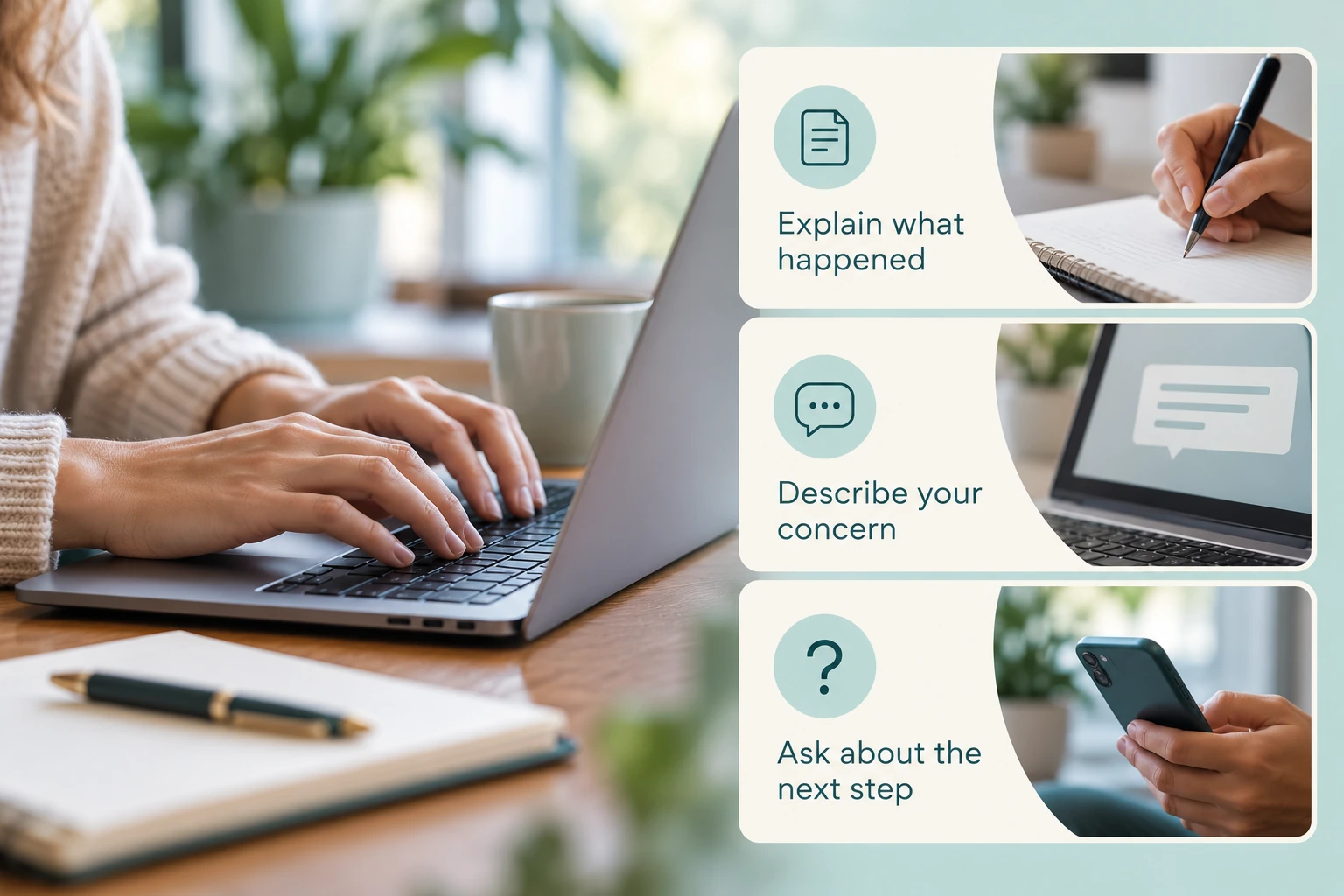
If you need to raise an issue, identify the communication or event you mean. A date, a page title or a short reference to correspondence can make the subject recognisable. Explain what remains unclear and what kind of response would help: an explanation of wording, confirmation of a detail, or information about the next step. These distinctions help keep the enquiry focused.
It can be useful to separate your account from your question. Describe the information you received, then state what you need to understand now. Doing so avoids asking the recipient to infer the point from a longer story. It also gives you a clearer basis for assessing whether the response addresses the issue you raised.
The Contact page provides the verified routes for beginning that conversation. The customer charter supplies context, while the actual reply should explain the arrangement relevant to your concern. Reading a commitment on this page does not open a complaint, notify anyone of an issue or establish that an action has been completed. For those outcomes, use the real communication route and retain the response connected to your request.
Information about the people behind an appointment

Key point
Ask about the people and qualifications relevant to your appointment.
The business name tells you which organisation's services you are reading about. It does not identify the individual who would carry out a particular appointment. This project does not have verified practitioner biographies, qualifications or staff names to publish, so those details are not supplied here. Their absence should not be filled with an assumption based on a treatment image or a professional-looking setting.
If the identity or training of the person involved matters to your decision, ask about the proposed arrangement. You might want to know who would discuss suitability, who would provide the service and which person or route would be relevant to a later question. Keep each question tied to the appointment or treatment you are considering rather than asking for a general title to stand in for every detail.
When a qualification or professional description is given to you, seek the information needed to understand its relevance. This page does not confirm a registration, award or accreditation, and it does not prescribe a credential for a particular procedure. The aim is to obtain an answer about the actual person and service under discussion.
Images on a website are another reason to be precise. A picture can illustrate a topic without proving who works at a business, what equipment would be used or what the premises look like. The supplied Home and Services images remain part of the existing site, but an image alone should not determine your expectations about your own appointment. Directly confirmed provider details are the appropriate reference for that question.
Practical accessibility requires specific answers

Key point
Confirm practical arrangements before relying on them.
Lipo Sculpt describes treatments across the UK, and the recorded official information includes home visits subject to treatment, suitability and local availability. Those broad statements introduce possibilities; they do not establish that every option can be delivered at every location. When setting matters to your decision, ask about the actual service and area involved.
An enquiry about a home visit can identify your preference without assuming that it has been accepted. You may need to find out whether the option is available, what location information is relevant and how the arrangement would be confirmed. Avoid planning around a general reference to nationwide services when your question is about a specific place or date.
For questions about your appointment arrangements, call Lipo Sculpt on 03300101799. Confirm the details relevant to your booking directly before making plans.
Practical details can be central to whether you want to continue, but they do not resolve suitability. A convenient setting does not make a service appropriate, and an explanation of suitability does not reserve a date. Bringing both subjects into the discussion gives each its proper place. If a detail is still awaiting confirmation, leave it marked as open in your own notes rather than allowing the general business description to settle it by implication.
Knowing what the published record can establish

Key point
Published information is a starting point, not a complete assessment.
The verified record for this website supports the business name, official contact routes, service range and particular published consultation details. It also records the customer charter and links to the official policies. It does not establish every statement a visitor might want about the business. Being clear about that boundary is part of presenting useful information.
For example, there is no verified founding date, company registration or detailed business history in the material reviewed for this project. This About page therefore does not tell an origin story or attach an unconfirmed length of experience to the name. It introduces Lipo Sculpt through the source-supported information that is available. Where background is essential to your decision, seek it directly from the organisation.
The same boundary applies to testimonials and results. No invented account of a customer's experience is added here. A description of the charter cannot be turned into a review score, and a list of services cannot be turned into evidence of a personal outcome. Factual restraint gives you a more accurate basis for deciding which further questions are worth asking.
You can make that enquiry concrete by identifying the missing detail and its relevance. Instead of assuming what a business label must mean, ask for the information you need to evaluate it. The answer may clarify the point or identify another source to consult. Either way, it is preferable to treating an attractive webpage as confirmation of facts that have not actually been supplied.
An informed decision has several dimensions

Key point
Consider the purpose, practicalities and limits together.
A treatment decision can combine personal interest, practical arrangements and questions about what has been proposed. These dimensions may carry different weight for different people. Someone who is interested in a service may still need to understand its limitations. Someone who has clarified the service may still need to review the cost or conditions. Progress on one subject does not remove the others.
Try identifying the decision immediately ahead of you. It might be whether to make an initial enquiry, arrange a telephone consultation or consider information from a discussion already held. Each stage needs an appropriate amount of information. You do not have to resolve every possible future detail before asking an opening question, but you should understand the step you are actually choosing to take.
The published consultation information provides one route beyond general reading. It describes a telephone conversation with a fee and a stated duration, while allowing you to consider treatment after the call. The Consultation page explains those recorded details. The Contact page serves a different purpose: finding a route for a question or an existing arrangement.
About provides the context around those routes. Its emphasis is on the business's stated approach and the limits of what general information establishes. Read the relevant page for the subject in front of you, then seek a specific answer where the website cannot supply one. That makes the decision more deliberate without implying that every enquiry must lead to treatment or that one person's priorities should determine another's choice.
Customer care and published conditions work together

Key point
Read the conditions relevant to the action you intend to take.
Customer-care commitments explain how an organisation describes its relationship with customers. Booking conditions explain another part of that relationship: the terms connected to arrangements and payments. A courteous conversation does not replace the applicable conditions, and a policy link does not by itself explain how a particular question will be answered.
The official terms recorded for this project include different notice periods in different passages. One appointment passage refers to 48 hours, while a deposit and change passage refers to three working days. This website does not decide which applies to your booking. If a change or cancellation is relevant, the appropriate next step is to obtain clarification from Lipo Sculpt rather than treating a broad statement of flexibility as the answer.
Privacy information needs the same attention to context. The official policy describes the official website and its systems. The pages here provide information and external links; they do not reproduce every form or data-request workflow described by that policy. Review the document associated with the destination where you are providing information.
Reading the charter alongside the relevant published conditions helps keep their roles clear. Use the charter to understand the approach being stated, and the policies to identify provisions that require attention before a particular action. Where the two leave a practical question unanswered, ask about that question specifically. This About page does not amend the policies or turn an interpretation into a new promise on behalf of the business.
The next page should match your next question

Key point
Choose the page that answers the question immediately ahead.
There is no single route through the website that every visitor has to follow. Your reason for being here can determine where you go next. If you want to investigate a treatment category, Services is the relevant overview. If you need to ask Lipo Sculpt something directly, Contact brings together the recorded telephone, enquiry destination and official social links.
Consultation is useful when you want the published details of the dedicated telephone discussion, including the fee and how to reach the official booking information. Privacy and Terms are document-focused pages that point to the full official texts and explain the boundaries of their summaries. They are especially relevant when your next action involves providing information or reviewing booking conditions.
Before following a route, put your remaining question into a sentence. That small step can reveal whether you need more general background or a direct answer about your circumstances. It can also prevent you from treating a different page's reassuring wording as a resolution to an issue it does not actually address.
Lipo Sculpt's published identity, range and charter provide the factual basis for this introduction. Your enquiry brings the individual context that a webpage cannot supply. Use the information to recognise the right subject, check what is known and continue through the appropriate route. Whether you decide to proceed, seek clarification or keep reading, the relevant next step is the one that answers the question you actually have.
Read the published customer charter · Source checked 4 October 2026.
Your next question matters
Speak to Lipo Sculpt about the details relevant to you.